
Add Row
Add Element
cropper
update

[Company Name]

Agility Engineers
update
Add Element
  • Home
  • Categories
    • SAFe
    • Agile
    • DevOps
    • Product Management
    • LeSS
    • Scaling Frameworks
    • Scrum Masters
    • Product Owners
    • Developers
    • Testing
    • Agile Roles
    • Agile Testing
    • SRE
    • OKRs
    • Agile Coaching
    • OCM
    • Transformations
    • Agile Training
    • Cultural Foundations
    • Case Studies
    • Metrics That Matter
    • Agile-DevOps Synergy
    • Leadership Spotlights
    • Team Playbooks
    • Agile - vs - Traditional
Welcome To Our Blog!
Click Subscribe To Get Access To The Industries Latest Tips, Trends And Special Offers.
  • All Posts
  • Agile Training
  • SAFe
  • Agile
  • DevOps
  • Product Management
  • Agile Roles
  • Agile Testing
  • SRE
  • OKRs
  • Agile Coaching
  • OCM
  • Transformations
  • Testing
  • Developers
  • Product Owners
  • Scrum Masters
  • Scaling Frameworks
  • LeSS
  • Cultural Foundations
  • Case Studies
  • Metrics That Matter
  • Agile-DevOps Synergy
  • Leadership Spotlights
  • Team Playbooks
  • Agile - vs - Traditional
November 05.2025
2 Minutes Read

Atlassian's Extended Timeline for Marketplace Revenue Share Changes: What It Means for Partners

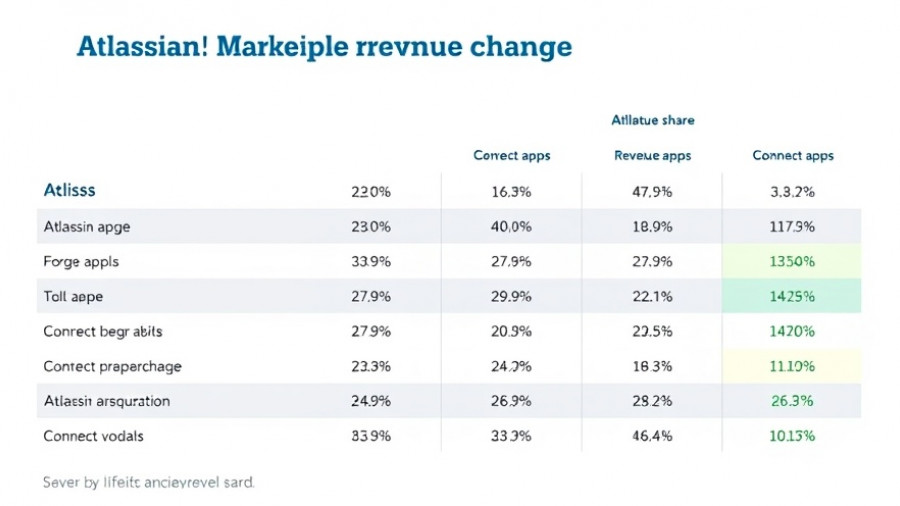
Atlassian Marketplace revenue share table showing rate changes and dates.

Atlassian Extends Revenue Share Timeline: What It Means for Partners

Atlassian has announced a significant extension to its revenue share timeline for Marketplace Partners, now slated to take effect on April 1, 2026. This decision comes amidst an evolving landscape where partners are navigating transitions from legacy systems to modern platforms like Forge. By delaying the effective date of revenue share increases for Connect and Forge apps, Atlassian aims to provide its partners with more time to adapt and innovate.

Revenue Changes: Insights and Impacts

The planned changes originally set for January 1, 2026—including an increase from 15% to 20% for Connect apps and a climb from 15% to 16% for Forge apps—will now occur over the course of 2026. This shift reflects an understanding of the pressures partners face as they work to migrate their applications and enhance customer experiences in a rapidly changing tech environment.

Moreover, partners can benefit from a 100% revenue share discount on qualifying Forge apps, a move that is designed to incentivize innovation and stimulate growth within the Marketplace. This means partners have more financial headroom to invest in app development, aligning very well with Atlassian's long-term goals to elevate cloud architecture.

Supporting Partner Communities: A Joint Journey Forward

The partnership between Atlassian and its Marketplace Partners is pivotal. As they collectively strive to meet the rising demands for cloud solutions, Atlassian acknowledges the importance of these partnerships in driving innovation. The extended timelines are not just changes in policy, but represent a commitment to co-creating the future of Atlassian's ecosystem. As partners think strategically about their own growth, the additional time provides a valuable opportunity to refine their offerings, streamline transitions to Forge, and fully leverage new capabilities.

For partners, understanding these developments means they can reassess their strategies and make informed decisions about where to invest their resources. Engaging with Atlassian's roadmap for Forge, partners can look to create applications that resonate with users’ needs and ensure they are well-prepared for future updates.

The Road Ahead: What’s Next for Atlassian and Partners?

The delayed revenue share implementation is just one aspect of a broader strategy to modernize the Marketplace and ensure it meets contemporary demands. Atlassian aims to facilitate a smoother transition for its partners to Forge while positioning their apps to capitalize on evolving AI capabilities and robust enterprise features.

As the landscape of software development continues to shift dramatically, these changes hint at a bright future for innovation in the Atlassian ecosystem. By tightening cooperation and elevating support mechanisms, Atlassian and its partners stand at the forefront of a transformative period in cloud applications.

Team Playbooks

8 Views

0 Comments

Write A Comment

*
*
Related Posts All Posts
12.03.2025

Atlassian's Availability on AWS Marketplace: Transforming Team Collaboration

Update Atlassian Teams Up with AWS Marketplace: A Major Step Forward for Cloud Solutions Atlassian has recently made a significant advancement in its offerings by partnering with AWS Marketplace, allowing users to access its renowned suite of cloud applications—including Jira, Confluence, and Jira Service Management—all in one place. This collaboration marks a pivotal shift for organizations looking to streamline operations, enhance collaboration, and accelerate innovation. Simplifying Procurement with One-Stop Shopping The merger with AWS Marketplace simplifies procurement processes for IT teams, allowing businesses to manage their Atlassian tools alongside AWS subscriptions seamlessly. One of the standout benefits is the consolidation of billing, which can significantly save companies both time and money. This means organizations can avoid the headaches associated with juggling multiple vendors and focus on what really matters: getting work done. Unlocking AI-Powered Insights for Better Outcomes In today’s rapidly evolving digital landscape, harnessing AI capabilities is a game changer. Instead of just simplifying procurement, this partnership sets the stage for enhanced AI integrations. With Jira Service Management incorporating tools like Amazon Quick Suite MCP and AWS Security Hub, teams can automate crucial security monitoring tasks and unlock advanced AI capabilities to drive productivity. Performance at the Speed of Business The transition of Atlassian’s major products to AWS Graviton architecture ensures faster performance and lower latency. Companies using tools like Jira and Confluence can expect to notice a distinct improvement in response times, which is vital for maintaining high efficiency in project management and collaboration. A Future of Enhanced Collaboration Overall, this partnership with AWS positions Atlassian as an agile player in the crowded software market. With over 300,000 organizations already relying on its solutions, the ability to leverage AWS’s vast infrastructure demonstrates Atlassian’s commitment to its mission: unleashing the potential of every team. Teams can now look forward to working smarter, not harder, and companies can tolerate less risk as they navigate cloud and AI integration. With these advancements, organizations can better prepare for a future where innovation and speed are paramount in gaining competitive advantages. Atlassian’s offerings through AWS Marketplace are more than solutions; they represent a pathway to a more collaborative and agile future.

11.28.2025

How Integrating AI in Design Systems Transforms Prototyping

Update Revolutionizing Design Systems with AI Integration The world of design is evolving rapidly, and companies like Atlassian are at the forefront of this transformation. By integrating AI into design systems, they aim to enhance prototyping processes, transitioning from traditional handoffs to collaborative handshakes that foster teamwork among designers and engineers. AI has the potential to streamline workflows, enabling teams to rapidly create wireframes and UI components from simple screenshots or templates, achieving up to 70% accuracy with Atlassian's design system on the first attempt. This improvement showcases how AI can significantly reduce repetitive tasks, empowering teams to focus on critical decision-making and creativity in design. Overcoming Implementation Challenges Despite the exciting possibilities AI presents, there are notable challenges in integrating it with existing design systems. Atlassian faced issues such as ensuring consistency in design elements and managing component imports across various tools. Key obstacles included needing to custom configure public npm packages and resolve styling discrepancies caused by proprietary tools. Moreover, AI-generated prototypes sometimes produced “hallucinations”—outputs that appeared correct but contained inaccuracies. Addressing these issues required developers to meticulously document and structure their design systems, helping AI learn which attributes and components align with the company's brand identity. Future Implications for Design The integration of AI in design not only accelerates processes but also prompts profound implications for the future of product design. As AI capabilities continue to advance, the need for robust design systems will become even more critical. AI-native design systems will enable designers to produce brand-aligned, high-fidelity prototypes rapidly, ensuring that visual consistency and functionality are preserved across various platforms. Tools like Figma are embracing similar methodologies by allowing teams to leverage AI to streamline prototyping while ensuring that newly created components remain within brand guidelines. This synergy between AI and design intuitively reflects the core essence of design thinking: enhancing creativity through collaboration and technology. Conclusion: Embracing the AI Design Revolution The move towards AI-driven design systems signifies a shift in how teams conceptualize and implement workflows in design and engineering. By overcoming initial hurdles, organizations can create efficient, scalable, and consistent design systems that not only address current needs but also prepare for future innovations in technology. As we transition further into this AI-augmented future, design professionals must remain agile, adapting to new tools and methods that enhance their craft while focusing on impactful collaboration that drives innovation.

11.27.2025

How Marketing Leaders Can Excel with Asynchronous Collaboration Tools

Update Unlocking Asynchronous Collaboration for Marketing Leaders In the fast-paced world of marketing, leaders are often faced with the challenge of coordinating distributed teams while maintaining productivity. The recent discussion between Loom and ServiceRocket highlights a crucial shift in how modern marketing teams operate—with a focus on asynchronous collaboration. The Shift from Meetings to Asynchronous Work Meetings are notorious for consuming valuable time, leading to bottlenecks and decreased productivity. Sarah E. Brown from ServiceRocket shared how her marketing team replaced traditional meetings with Loom video messages, which allowed them to provide updates and feedback at their convenience. This transition accelerated decision-making and liberated team creativity, enabling faster project completion. Enhancing Productivity and Employee Engagement Asynchronously sharing updates and feedback not only improves productivity but also boosts team morale. Research shows that marketing professionals often spend about 58% of their time on tasks that hinder actual work progress. The ability to engage in asynchronous communication lets team members respond when they are most focused, leading to more thoughtful contributions. Moreover, platforms like Atlassian’s Jira provide frameworks for tracking campaign performance in real-time, linking tasks directly to ROI, which enhances accountability. Keys to Implementing Asynchronous Collaboration Understanding the principles behind effective asynchronous communication is essential. Setting clear expectations for response times and using tools like Loom for video messaging create streamlined workflows. As organizations adopt these practices, they also need to encourage inclusive communication that accommodates different time zones and work styles, thereby fostering a more cohesive team environment. Future Trends and Insights Looking ahead, the use of asynchronous communication is poised to grow. Strategies such as integrating AI tools for enhanced communication will further break down barriers. As teams become more diverse and globally distributed, adopting an asynchronous mindset will be crucial for sustained innovation and productivity. For marketing leaders around the world, embracing these strategies means not only working more effectively but also cultivating a culture of trust and transparency. As the shift continues from real-time interactions to more meaningful, asynchronous collaboration, the potential for creating powerful, responsive teams is limitless.

Terms of Service

Privacy Policy

Core Modal Title

Sorry, no results found

You Might Find These Articles Interesting

T
Please Check Your Email
We Will Be Following Up Shortly
*
*
*